
When I first started working with businesses that wanted faster growth, I noticed one common frustration—they were spending money on marketing but couldn’t clearly measure the results. That’s exactly where performance marketing changed the way I approached digital growth.
This blog is not theory. It’s based on what I’ve seen work on the ground with local businesses, service providers, and growing brands. If you’re looking for clarity instead of hype, this is for you.
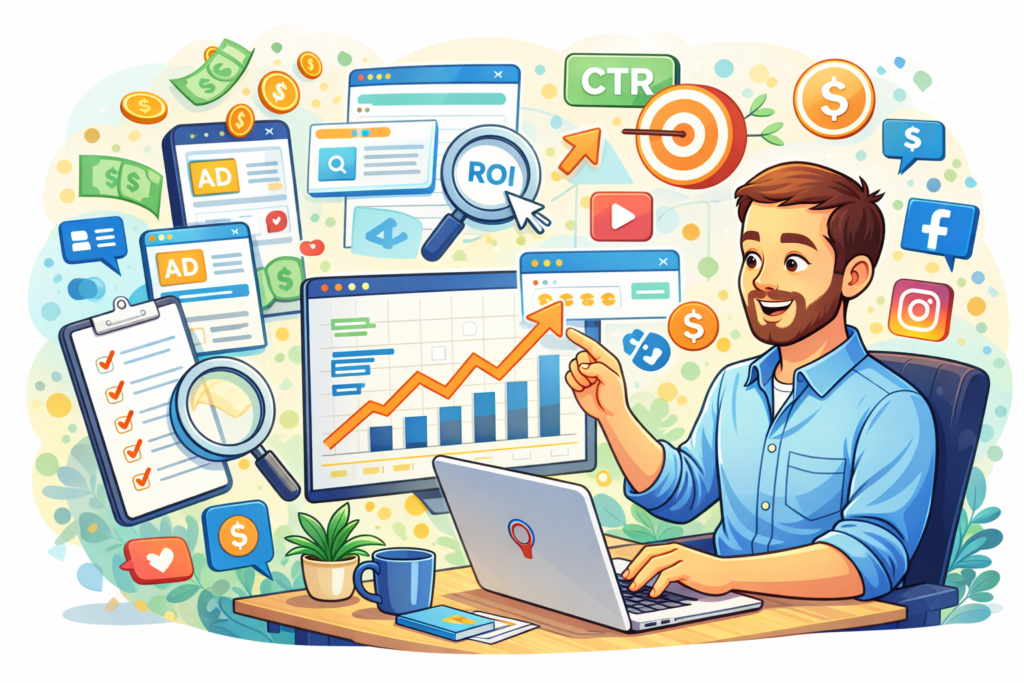
What Performance Marketing Really Means in Practice
In simple terms, performance marketing is about measurable outcomes. Every action has a purpose, and every campaign is tracked against real business goals.
From my experience, this approach works best because:
- You know exactly where money is going
- Results are transparent
- Decisions are based on data, not assumptions
Instead of focusing on visibility alone, performance marketing focuses on actions—leads, calls, bookings, and sales.
Why Businesses Shift Toward Performance-Based Strategies
Most businesses don’t want more likes or impressions. They want customers. That’s why many of my clients eventually move toward performance marketing after trying other methods.
The biggest shift happens when businesses realize:
- Awareness without conversion doesn’t pay bills
- Budget control matters
- Every campaign should have a clear objective
When marketing becomes accountable, confidence increases.
Starting With Clear Goals Makes All the Difference
One thing I’ve learned early on is that performance marketing fails without clarity. Before running any campaign, I define the goal in simple terms.
Common goals include:
- Generating local leads
- Increasing phone calls
- Driving store visits
- Boosting online sales
When the goal is clear, everything else—ads, landing pages, targeting—falls into place.
Choosing the Right Platforms Based on Intent
Not every platform works for every business. A big part of performance marketing is choosing channels based on user intent, not trends.
From my experience:
- Search ads work well for high-intent users
- Social ads are effective for discovery and remarketing
- Local campaigns perform best when location signals are strong
The key is matching the platform to how customers actually search and decide.
Landing Pages Matter More Than Ads
This is something many people underestimate. In performance marketing, ads don’t convert—landing pages do.
I always focus on:
- Clear messaging
- One primary call-to-action
- Fast loading speed
- Mobile optimization
Even the best ads fail if the landing experience is confusing. Small improvements here often lead to big performance gains.
Local Performance Marketing Delivers Faster Results
For local businesses, performance marketing becomes even more powerful when combined with local intent.
I’ve seen better results when campaigns include:
- Location-based targeting
- Local keywords and language
- Call extensions and map visibility
- Time-based scheduling
When people search locally, they’re usually ready to act. That’s why local optimization plays a huge role.
Tracking the Right Metrics (Not Vanity Numbers)
One of the most important lessons I’ve learned in performance marketing is knowing what not to track.
Instead of focusing on likes or impressions, I prioritize:
- Cost per lead
- Conversion rate
- Call quality
- Return on ad spend
These metrics show real performance, not just activity.
Testing and Optimization Is Where Growth Happens
No campaign is perfect from day one. Performance marketing improves through continuous testing.
I regularly test:
- Ad copy variations
- Audience segments
- Landing page layouts
- Bidding strategies
Small adjustments over time often lead to consistent improvements rather than sudden spikes.
Budget Control Builds Long-Term Confidence
One reason businesses trust performance marketing is predictability. When results are tracked, budgets become easier to manage.
I help businesses:
- Start with controlled budgets
- Scale only what works
- Pause underperforming campaigns
- Invest more in proven channels
This reduces risk and improves confidence in marketing decisions.
Why Experience Matters in Performance-Driven Campaigns
Tools are available to everyone, but experience makes the difference. Performance marketing is not about pushing buttons—it’s about understanding behavior.
From my experience:
- Small mistakes can waste budget
- Poor targeting attracts wrong leads
- Wrong messaging lowers conversion quality
That’s why strategy matters as much as execution.
Performance Marketing Is Not a One-Time Activity
One mistake I often see is treating performance marketing as a short-term solution. In reality, it works best as a continuous process.
Consistent growth comes from:
- Regular monitoring
- Ongoing optimization
- Learning from data
- Adapting to market changes
This approach creates stability instead of temporary wins.
How Performance Marketing Supports Business Growth
When done correctly, performance marketing supports real business goals—not just marketing KPIs.
It helps businesses:
- Generate predictable leads
- Improve cash flow visibility
- Scale confidently
- Make data-driven decisions
That’s why many businesses stick with it long term.
Final Thoughts From My Experience
After working with different industries and local markets, I can confidently say that performance marketing works best when clarity leads the strategy. It’s not about spending more—it’s about spending smarter.
When goals are clear, tracking is accurate, and optimization is ongoing, marketing stops feeling like an expense and starts becoming an investment.
If you approach performance marketing with patience, discipline, and the right mindset, the results speak for themselves.
